
What is a dental implant?
A dental implant is a small titanium fixture placed in the jawbone to replace the root of a missing tooth. It can support a single crown, several teeth or a full-arch restoration. It consists of a high-grade, biocompatible titanium screw that is surgically inserted into the jawbone, effectively replacing the root of the missing tooth. This titanium fixture serves as a stable foundation for various restorative components such as a lifelike crown, bridge, or full-arch restoration.
At Dawood & Tanner, we utilise Nobel Biocare™ dental implants, a system we’ve trusted since the early 1990s. These implants are renowned for their quality and longevity, supported by extensive scientific research and clinical success. Our commitment to using such premium materials ensures that our patients receive the best possible outcomes, with implants that are tailored to their specific needs and designed to last.
Osseointegration is the key to long-term dental implant success. This natural biological process allows the titanium implant to bond securely with the jawbone, forming a stable foundation for a replacement tooth or bridge. By integrating seamlessly with the bone, the implant not only restores function but also helps maintain bone density and structure—preventing the bone loss that typically follows tooth loss.
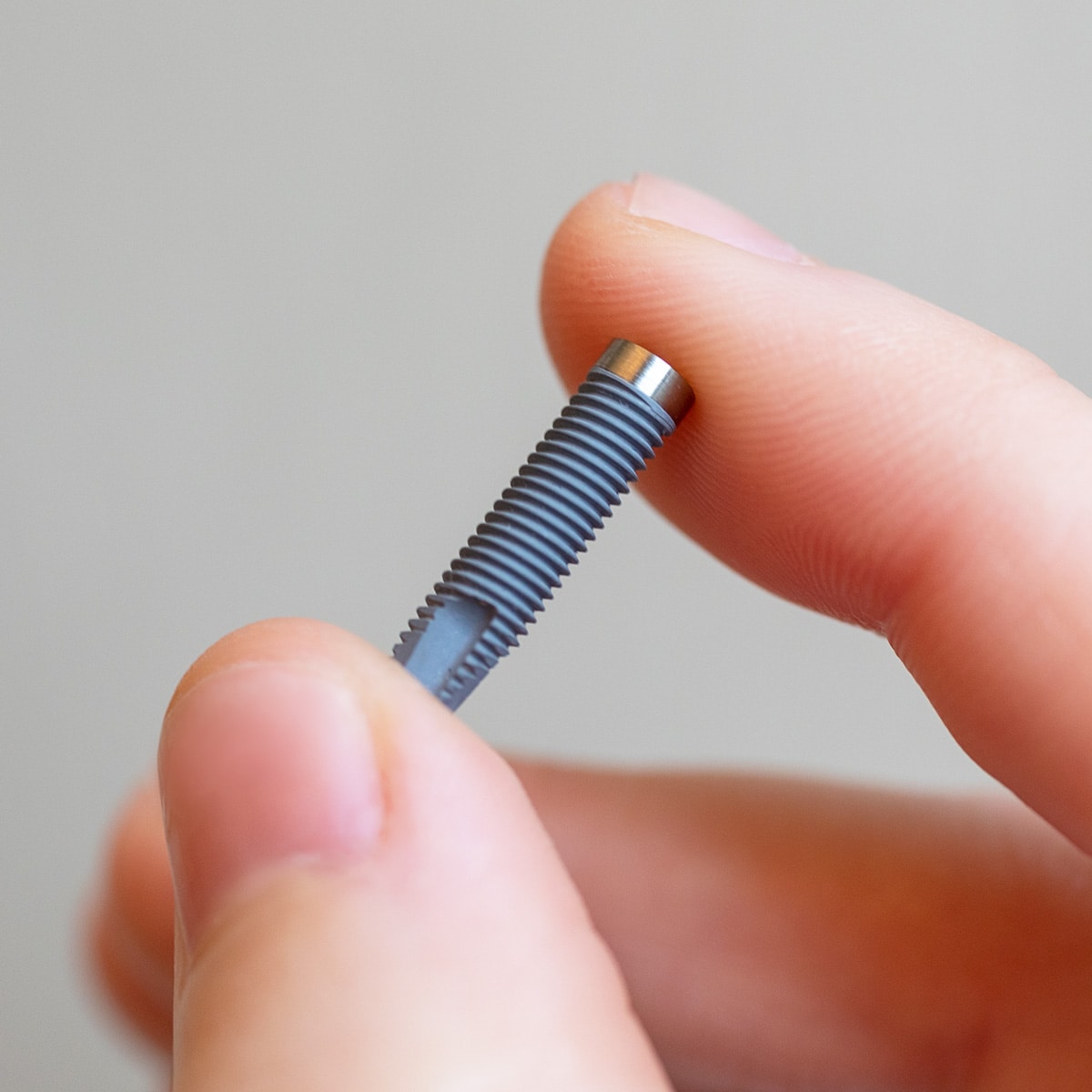
Advanced dental implant technology and planning
Advanced technology is integrated throughout our dental implant process, from initial 3D imaging and treatment planning to guided implant placement and the design and manufacture of restorations. It allows us to plan treatment in exceptional detail before surgery begins, work with a high degree of accuracy and create restorations designed for long-term function and appearance.
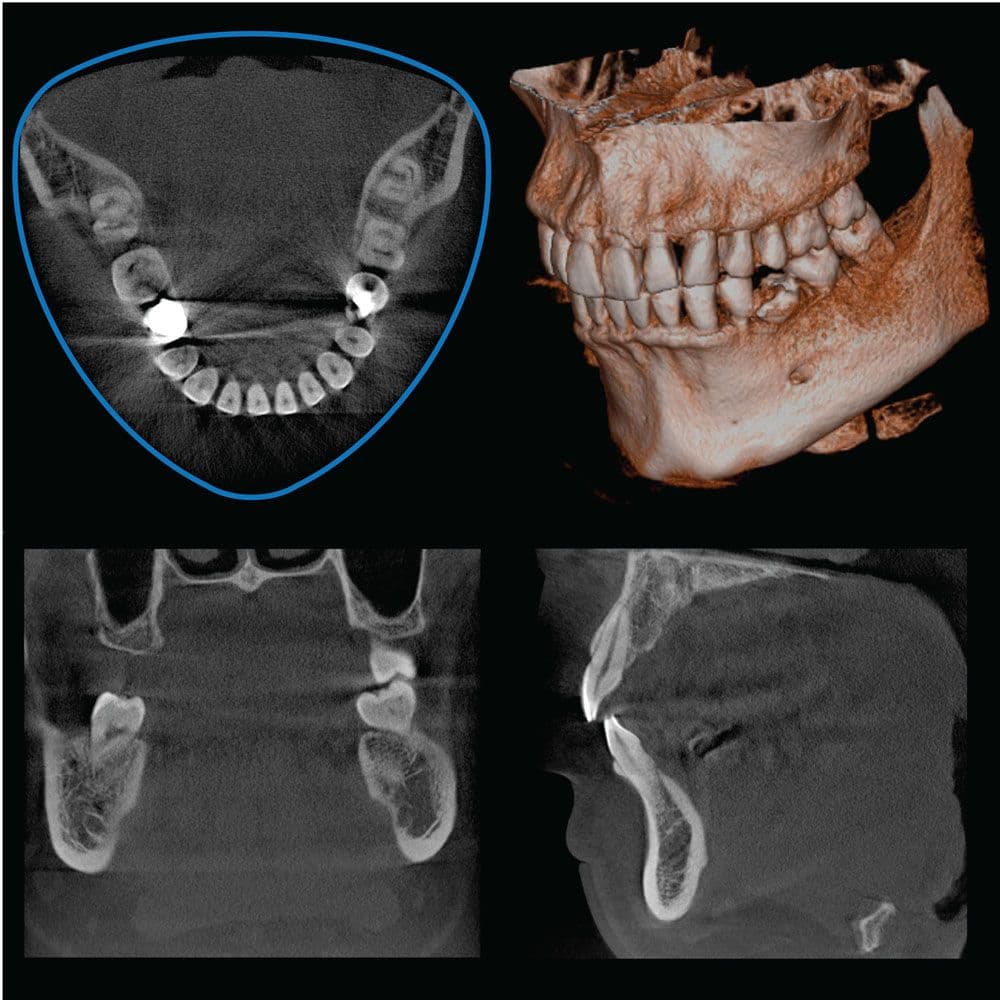
3D Imaging: Morita CBCT
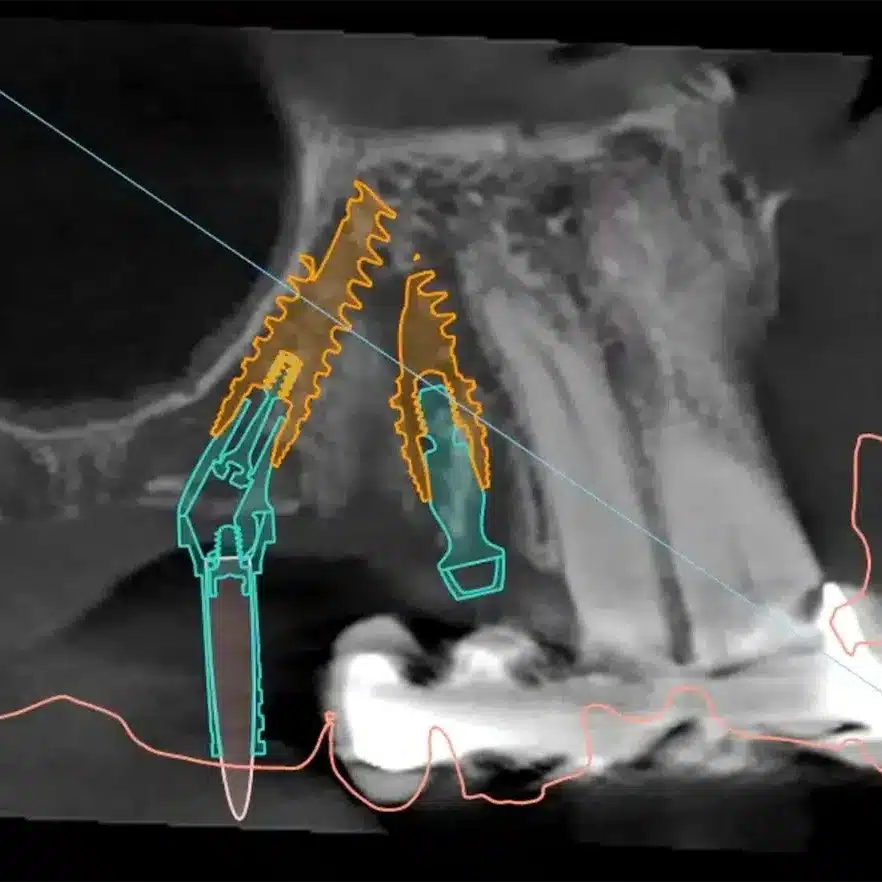
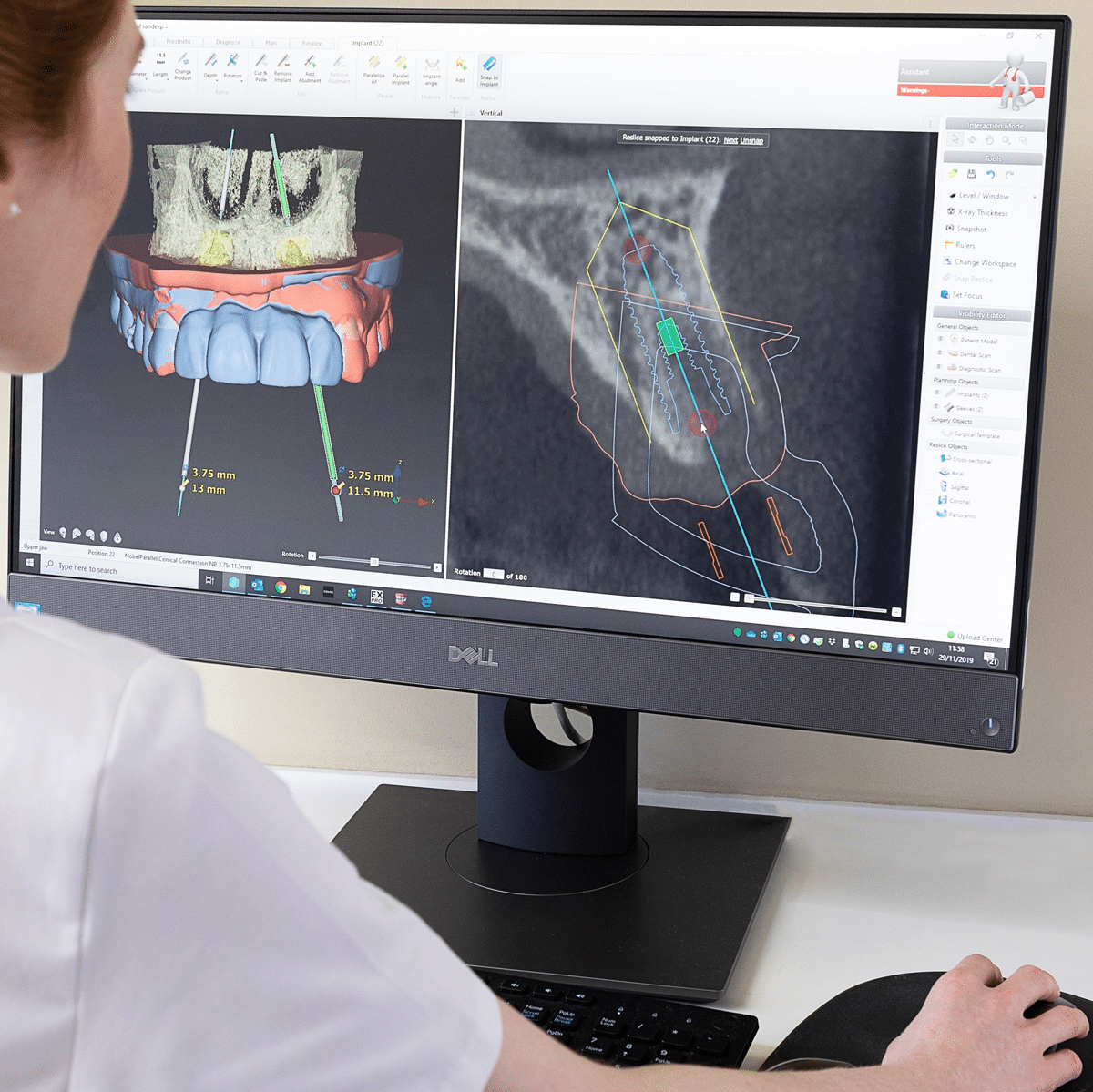
Digital Implant Planning
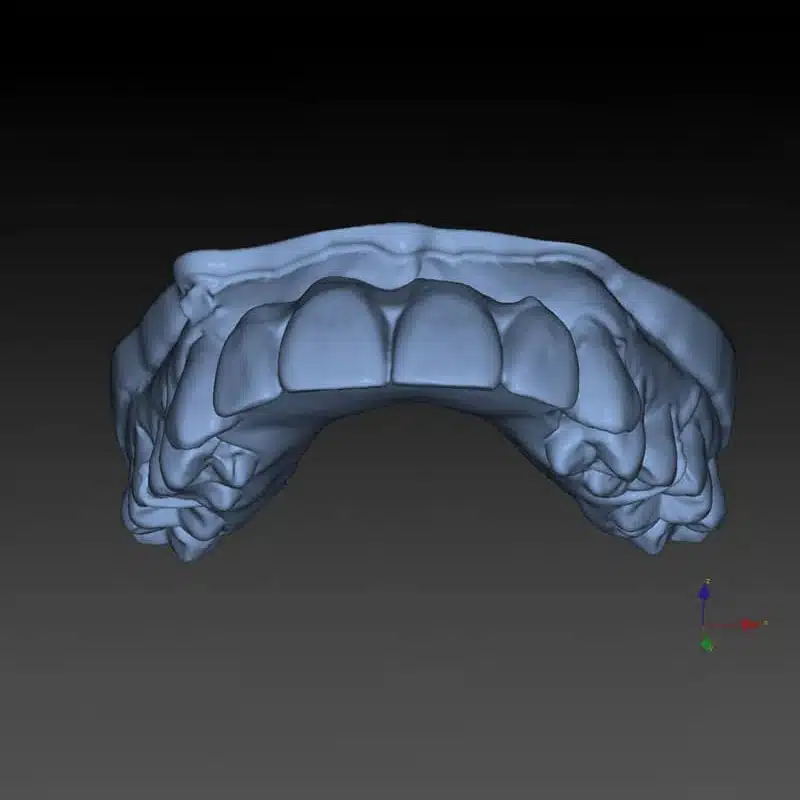
Computer-Aided Design (CAD)
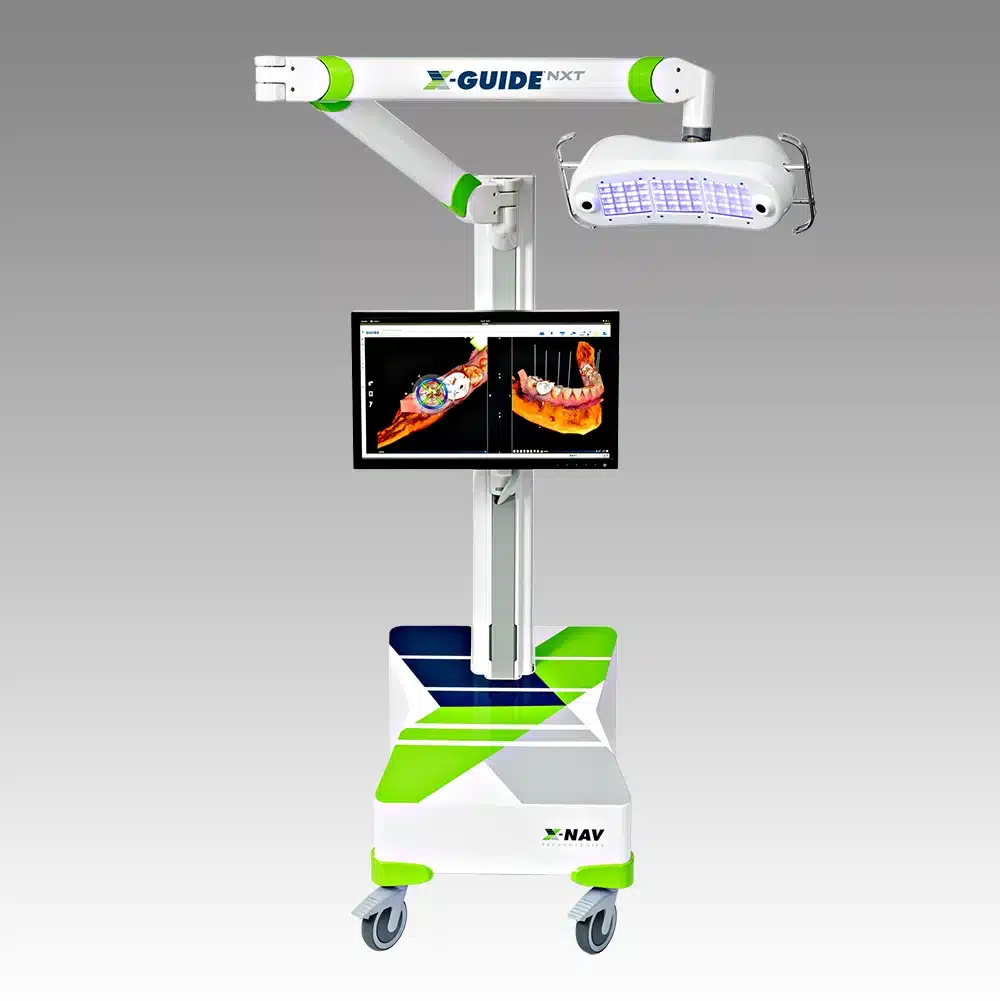
Real-Time Implant Navigation: X-Nav
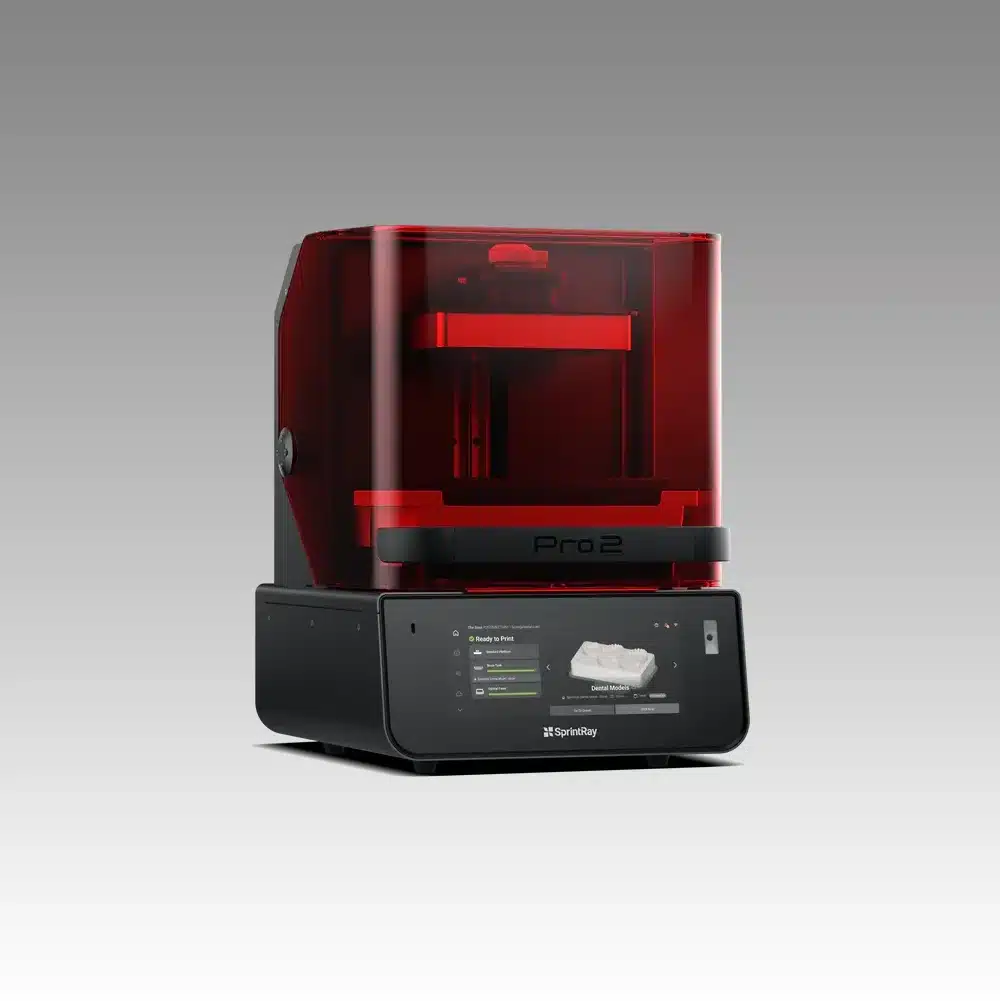
In-House 3D Printing: SprintRay
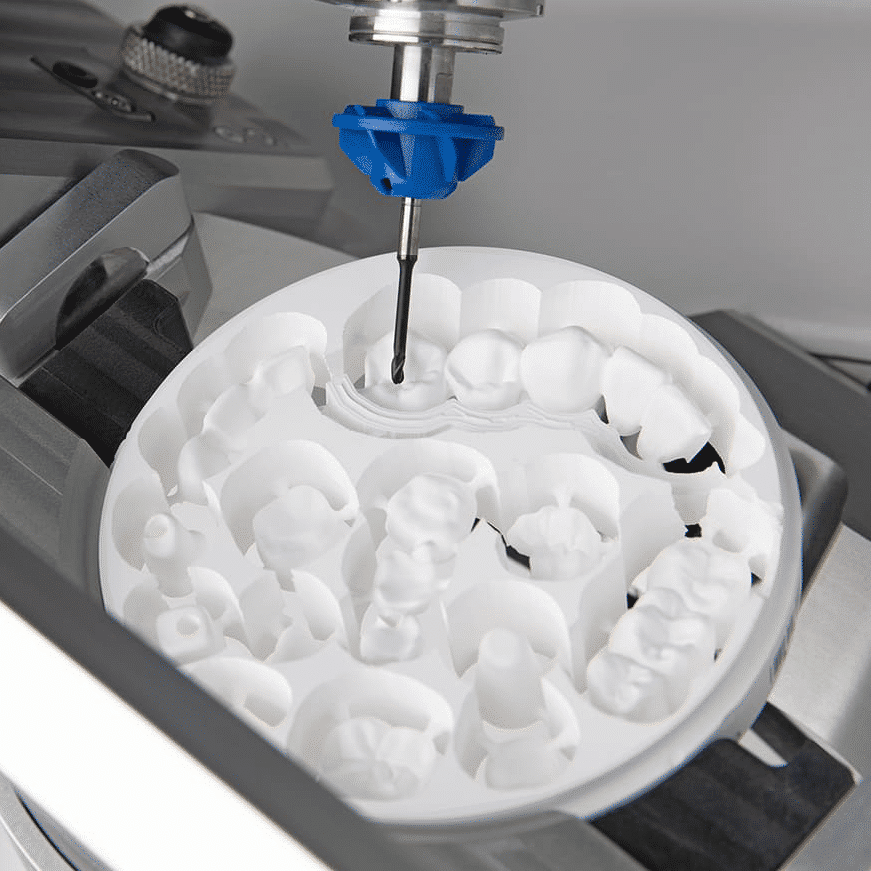
In-House Milling: VHF
The Dawood & Tanner dental implant treatment process
Trusted systems, proven results
Dr Andrew Dawood and the Dawood and Tanner implant team have placed thousands of dental implants for patients with missing or poorly restored teeth. With over 30 years of experience, we have streamlined the dental implant surgical process to make it as frictionless as possible for the patient — ensuring the best possible outcome and long-term success.
All of our implants and components are from Nobel Biocare, a globally recognised leader in implant dentistry. We have worked with their system for decades with consistently exceptional outcomes. We are proud that many of our patients who had dental implants placed over 25 years ago continue to have healthy and trouble free implants and restorations!
Treatment planning for predictable outcomes
Dawood & Tanner uses advanced 3D imaging and CAD planning technologies to achieve exceptional accuracy in dental implant placement. This approach supports fully individualised treatment plans, reduces the need for invasive surgery, and significantly improves the reliability of long-term outcomes.
Dental implant procedures at Dawood & Tanner are often completed in under an hour. A same-day provisional restoration — your immediate ‘smile in a day’ — may be placed so you leave with natural-looking teeth. The final prosthetic is then meticulously refined to match the shape, contour, and shade of your surrounding teeth, resulting in a beautifully integrated and long-lasting restoration.
Step 1: Initial Consultation & Advanced Digital Planning
Your journey begins with an in-depth consultation, utilising state-of-the-art 3D imaging to evaluate bone structure, gum health, and occlusion. This allows our specialists to create a fully customised treatment plan tailored to your specific needs.
Step 2: Precision-Guided Implant Placement
✔ Minimally invasive techniques for optimal comfort.
✔ Performed under local anesthesia or sedation, ensuring a relaxed experience.
✔ For eligible patients, immediate restorations may be placed on the same day.
Step 3: Review
The implant surgeon will see you 2 weeks after your surgery to check the implants and ensure you’re healing well. Any remaining stitches may be removed and if a temporary restoration has been provided, they will check that the biting surface is even.
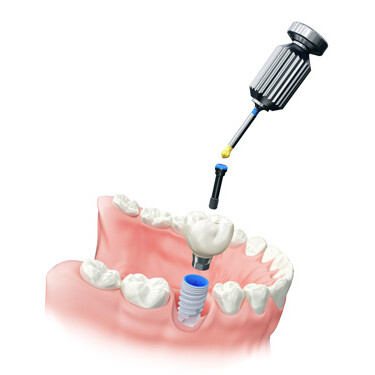
Step 4: Healing & Osseointegration
✔ Over 2-6 months, the implant fuses securely with the bone.
✔ Regular follow-ups ensure optimal healing and success.
Step 5: The Final, Bespoke Restoration
Once integration is complete, a handcrafted crown, bridge, or full-arch prosthesis is meticulously designed to complement your natural teeth.
Step 6: Maintaining your implants
Dental Implants and their restorations are susceptible to similar conditions to those that affect natural teeth such as gum disease. Regular visits to your hygiene therapist and excellent oral hygiene at home is a lifetime commitment that will help you give your implants the greatest longevity.
We can assess your needs and find the right treatment for you
Every patient is different. From replacing a single missing tooth to rebuilding function after extensive tooth loss, severe bone loss or previous implant failure, our specialist team has the experience and technology to plan even the most complex treatment with confidence.
FAQ's about dental implants
Dental implants are small titanium fixtures placed in the jawbone to replace the roots of missing teeth. Once integrated with the bone, they provide a stable foundation for a single crown, several replacement teeth or a full-arch restoration.
Most adults with missing or failing teeth can be considered for dental implants, but suitability depends on your oral health, general health, bone and individual circumstances. Even significant bone loss does not necessarily rule out implant treatment, as advanced techniques may provide solutions for more complex cases.
Treatment begins with a detailed assessment and 3D imaging, followed by digital planning of the implant position and final restoration. The implant is placed into the jawbone and allowed to integrate before the final teeth are fitted. In suitable cases, temporary teeth can be provided on the same day.
Treatment time varies according to the number of implants, the condition of the bone and whether additional procedures are required. Some patients can receive temporary teeth on the day their implants are placed, while the implants themselves usually require a period of healing before the final restoration is fitted.
Dental implants are designed as a long-term replacement for missing teeth and can function successfully for many years. Their longevity depends on factors including oral health, general health, smoking and ongoing maintenance, so regular professional care and good daily cleaning remain important.
For many patients, dental implants provide greater stability and chewing function than removable dentures because the replacement teeth are supported by implants anchored in the jaw. They can replace individual teeth or support fixed full-arch teeth, although the most appropriate solution depends on each patient’s circumstances.
Yes, significant bone loss does not necessarily mean that dental implant treatment is impossible. Depending on the amount and location of the remaining bone, treatment may involve bone grafting or alternative techniques. For severe bone loss in the upper jaw, zygomatic implants can sometimes provide an alternative to extensive grafting.
Zygomatic implants are longer implants anchored in the cheekbone rather than relying solely on the upper jawbone. They are used in selected patients with severe upper-jaw bone loss and can make fixed implant-supported teeth possible when conventional implants may not be suitable.
Yes, failed dental implants can often be removed and replaced, although treatment depends on why the implant failed and the condition of the surrounding bone and gum. Dawood & Tanner regularly manages implant complications and complex revision cases, including patients referred after previous implant treatment has failed.
In suitable cases, implants and a fixed temporary restoration can be provided on the same day. This is particularly relevant to some full-arch treatments, but it is not appropriate for every patient. Careful assessment and 3D planning are needed to determine whether immediate fixed teeth are a suitable option.
Dental implants require careful daily cleaning and regular professional maintenance, just like natural teeth. Cleaning around the implant and restoration helps protect the surrounding gum and bone, while regular examinations allow the health of the implants and supporting tissues to be monitored.
The cost of dental implant treatment depends on the number of teeth being replaced, the complexity of treatment and whether procedures such as bone grafting are required. Following a detailed assessment, you will receive a written treatment plan explaining the recommended treatment and costs before deciding whether to proceed.
Dawood & Tanner has provided dental implant treatment for more than 30 years, from replacing individual teeth to managing severe bone loss, failed implants and complex full-arch reconstruction. Treatment is supported by multidisciplinary specialist expertise, advanced 3D imaging, digital planning, navigated implant placement and in-house digital design and manufacturing.