
Dawood and Tanner have always embraced innovation, but never simply for its own sake.
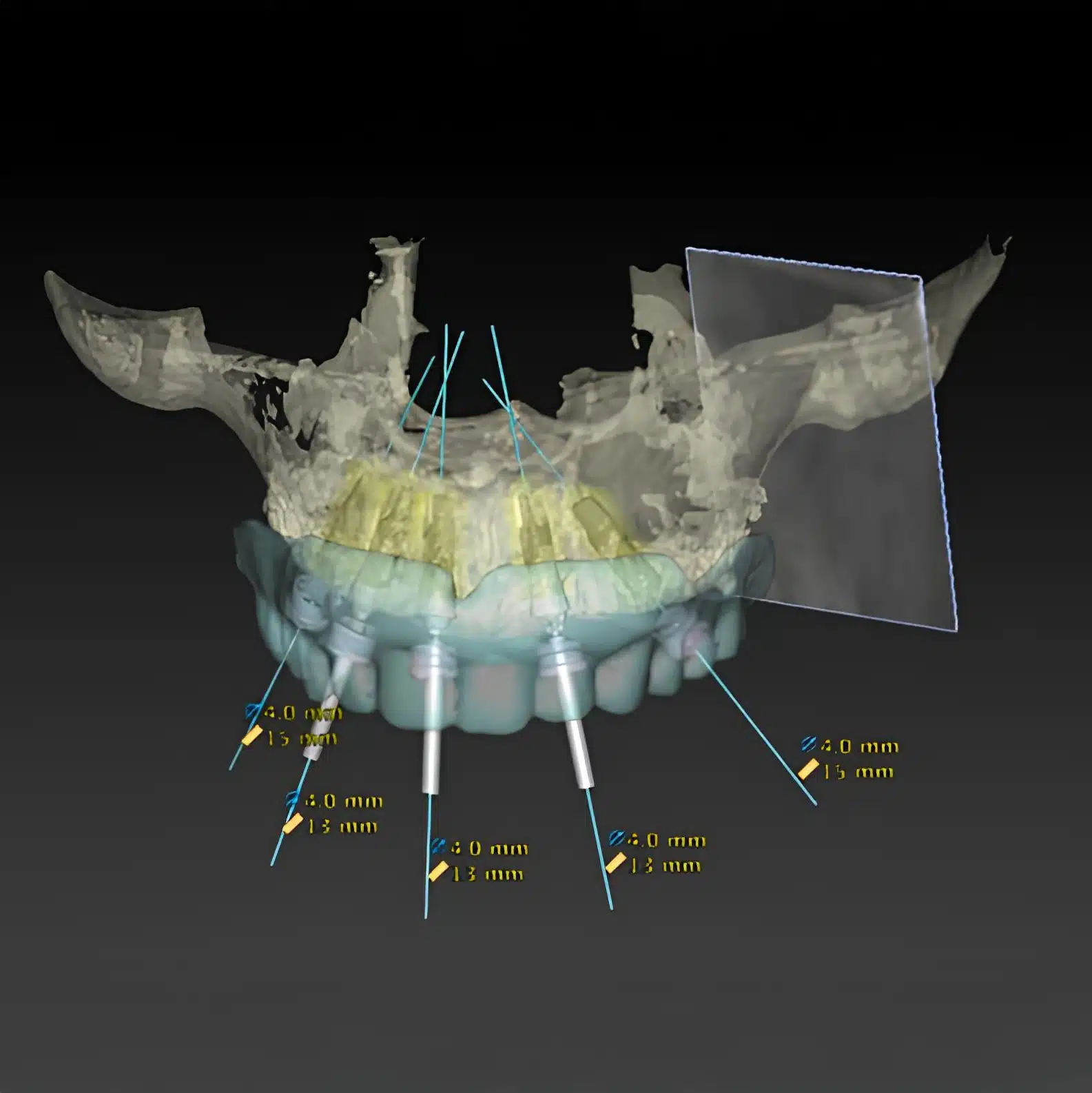
We were proud to be the first dental practice in the UK to introduce 3D imaging in 2009, bringing a new level of precision to diagnosis and safety. We were also among the first to adopt intraoral scanning, replacing the need for impression materials in many cases; a significant improvement in patient comfort.
Since then, digital dentistry has grown exponentially, and we have stayed at the forefront. We also know that success is not just about having the latest technology. It is also about knowing when and how to use them, and when traditional laboratory techniques can offer something digital systems cannot.
The role of digital dentistry
Digital applications have significantly enhanced how we plan and deliver care.
Cone Beam CT (CBCT) imaging provides high-resolution 3D views of the teeth, jaws, nerves, and surrounding anatomy. This is invaluable for dental implant planning, endodontic diagnosis, orthodontic and periodontal assessments. It allows us to make highly informed, safer decisions, particularly in complex or surgical cases.
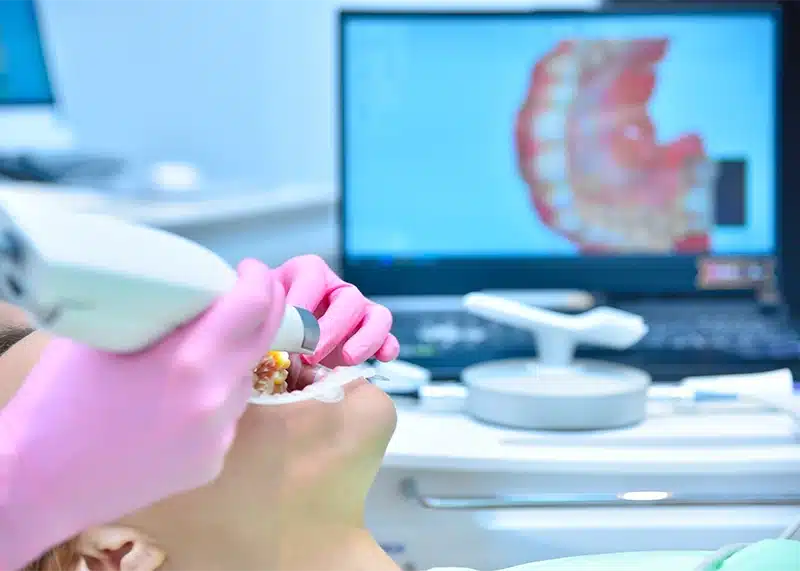
Intraoral scanning
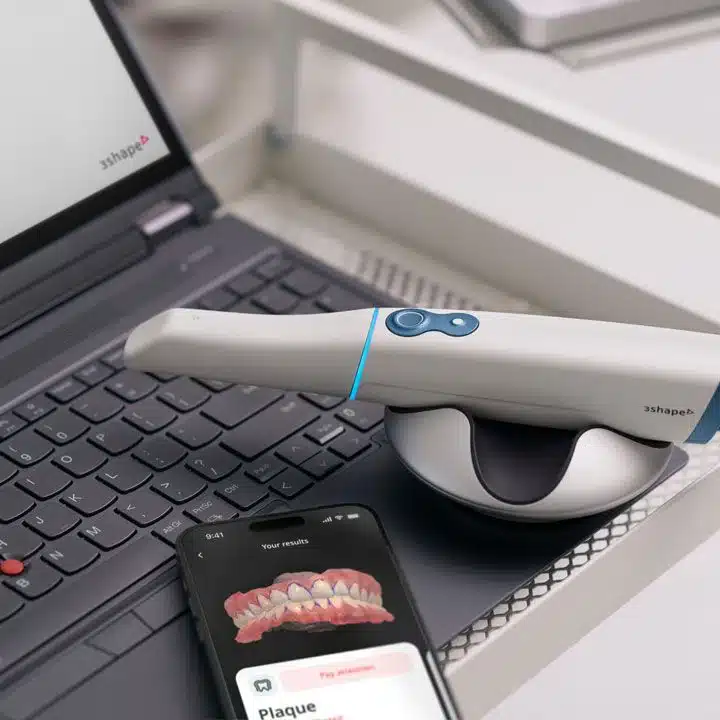
(IOS) has similarly transformed everyday dentistry. These scanners capture highly accurate digital impressions without the need for traditional impression taking. We use IOS for designing crowns, bridges, veneers, clear aligners, and implant restorations. The process is faster, more comfortable, and seamlessly integrates with digital workflows, often reducing turnaround times and improving precision.
How digital workflows improve your consultation and treatment experience
While the technology itself is complex, the benefits to you as a patient are simple and immediate. We use these digital workflows to improve your journey in five important areas:
Bringing patient consultations to life: Clear visuals allow you to feel more informed and involved in the planning stages of your treatment. Most importantly, you can see how your teeth could look at the end of treatment and have a say about what your wishes for the final outcome might be. You also can have a copy of the scan to share and discuss with friends and family.
Enhanced Comfort: For many patients, the most welcome change is the elimination of traditional impression material. The digital dental scanner is a small, handheld device that hovers over the teeth, reducing the discomfort and potential gag reflex associated with bulky impression trays.
Greater Understanding: It can be difficult to fully understand a treatment plan based on a technical description alone. By combining 3D scans and imaging on screen, we show you a simulation of your teeth and jaws. This allows you to see your current oral health and the proposed outcome, ensuring you feel fully informed and in control of your decisions.
Time and Efficiency: Digital data can be sent instantaneously to our laboratory partners. This streamlines the communication process and often reduces the turnaround time for manufacturing bespoke restorations. Furthermore, the accuracy of digital planning means less time is spent adjusting restorations in the chair, making your appointments shorter and more efficient.
Clinical Accuracy: Precision is not just an abstract concept; it translates to safety and longevity. In implant dentistry, for example, computer-guided surgery allows us to place implants with sub-millimetre accuracy, avoiding sensitive nerves and ensuring the ideal foundation for your new tooth.
The future of dentistry is here - redefining how dentists diagnose, treat and deliver patient care
Matching the approach to the clinical need
However, not every clinical scenario is best served by a digital approach. There are specific instances where traditional impressions and analogue workflows still offer distinct advantages.
Complex Soft Tissue: if the edges of a tooth preparation lie below the gum line, light from an intra-oral scanner may not penetrate deeply enough, whereas a traditional impression technique can record detail more reliably.
Mobile Dentition: For patients with loose or fragile teeth, the manipulation required for a digital scan can be challenging. A carefully managed impression is often the safer, more stable choice.
Aesthetic Nuance: For full-arch rehabilitations or complex occlusal reconstructions, there is often no substitute for the physical model. A skilled dental technician may prefer to evaluate a physical cast under natural light to match shade, texture, and layering with a level of nuance that a screen simply cannot replicate. In these situations, the artisanal approach holds tremendous value.
Matching the approach to the clinical need
However, not every clinical scenario is best served by a digital approach. There are specific instances where traditional impressions and analogue workflows still offer distinct advantages.
Complex Soft Tissue: if the edges of a tooth preparation lie below the gum line, light from an intra-oral scanner may not penetrate deeply enough, whereas a traditional impression technique can record detail more reliably.
Mobile Dentition: For patients with loose or fragile teeth, the manipulation required for a digital scan can be challenging. A carefully managed impression is often the safer, more stable choice.
Aesthetic Nuance: For full-arch rehabilitations or complex occlusal reconstructions, there is often no substitute for the physical model. A skilled dental technician may prefer to evaluate a physical cast under natural light to match shade, texture, and layering with a level of nuance that a screen simply cannot replicate. In these situations, the artisanal approach holds tremendous value.
A balanced, patient-centred philosophy

The clinicians at Dawood & Tanner use the latest technology wisely. Our team is experienced in both cutting-edge digital techniques and traditional hands on dentistry. This allows us to select the best approach, or combination of approaches, for each individual case. We use digital technology where it offers clear benefits and rely on expert craftsmanship when it provides a better result.
Our goal is always the same: to deliver dental care that is precise, comfortable, and tailored to each patient’s unique needs. Whether we are planning your smile digitally and using computer aided manufacturing technologies or hand finishing a restoration to optimally blend with your natural teeth, you can be confident that every decision is based on clinical expertise and your best interests.
The clinicians at Dawood & Tanner use the latest technology wisely. Our team is experienced in both cutting-edge digital techniques and traditional hands on dentistry. This allows us to select the best approach, or combination of approaches, for each individual case. We use digital technology where it offers clear benefits and rely on expert craftsmanship when it provides a better result.
Our goal is always the same: to deliver dental care that is precise, comfortable, and tailored to each patient’s unique needs. Whether we are planning your smile digitally and using computer aided manufacturing technologies or hand finishing a restoration to optimally blend with your natural teeth, you can be confident that every decision is based on clinical expertise and your best interests.